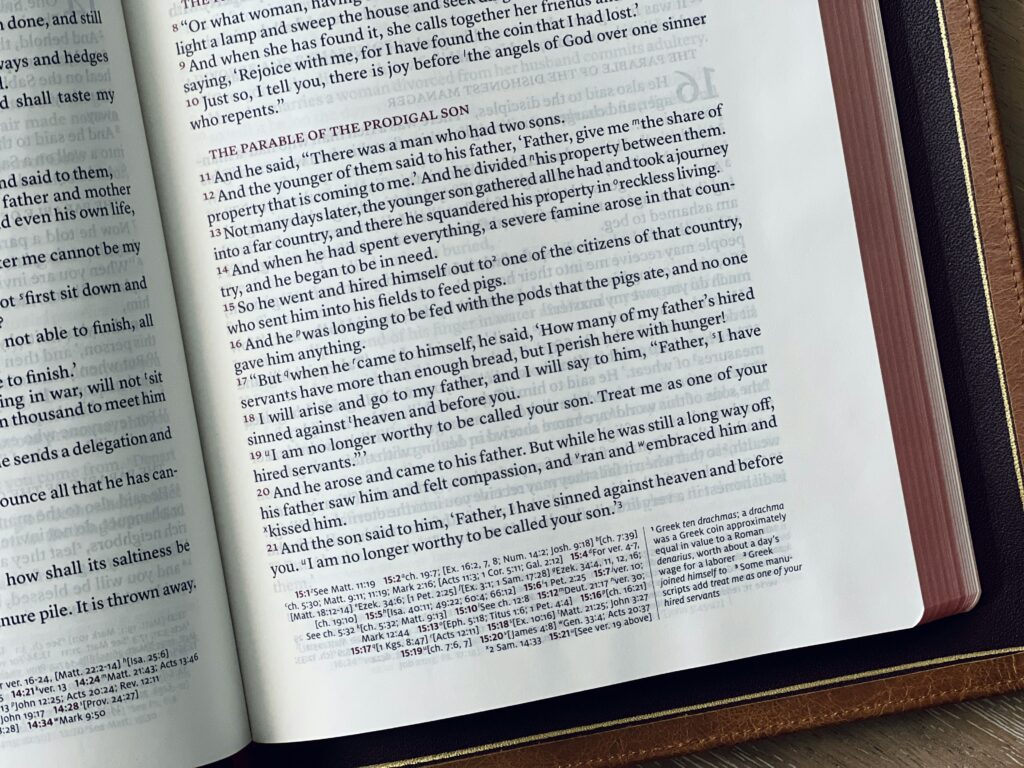
From the first page of the Bible, we learn that we have a Creator who spoke this world into existence, and that includes you and me. From a heart of profound love and a mind of omniscience, He laid out His plans and designs joyfully. Yet, we often struggle to understand ourselves because we don’t know or understand the One whose image we bear. Many of us have no idea how God “looks” – His character and heart and plan. And that’s not because He is hiding it.

Over the course of 1500 years, guiding and inspiring 40 authors from myriad walks of life, God gave people – all people — His whole autobiography, telling us about our design and purpose in the process. Yet, amidst all the avenues of wisdom we seek, God’s Word is too often our last resort if it’s even pursued at all.
Here is the glorious truth: feasting on God’s Word, the Bible, will not only introduce us to our Creator, but also will guide us into deeper and deeper relationship with Him and greater understanding of His plans for our lives. In the process, we will experience greater peace, joy, trust, and assurance than we could find anywhere else. But how do we do it? Today, we are exploring five ways to feast on God’s Word, and the benefits of each. My hope is that all of us will get even more excited about chewing on the Word of God, and perhaps be encouraged to take on a new course at His banquet table.
Five Courses of Feasting on God’s Word:
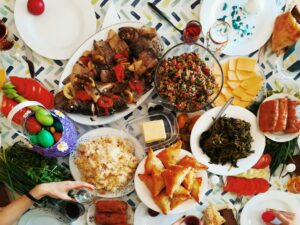
Here at The Sublime Soiree, we love to consider dinner parties. After all, our name is synonymous with them! As we have been considering this idea of feasting with God through His Word, I started to think about each course of a meal and comparing it to the way I interact with Scripture. For a moment, picture a large dinner gathering in your mind, and let’s journey through the courses together.
Course #1: The Sample Tray
You have just arrived at the gathering and guests are standing in small groups, acquainting or reacquainting themselves with each other and sharing conversation. Circling amongst the guests are a few people with trays of finger foods, little morsels of goodness meant to whet the appetite without really satisfying it. The samples are so small, in fact, that their flavor is forgotten almost as quickly as it was enjoyed. You chewed on it for sure, but any evidence of the fact is nearly indetectable.

That’s how I sometimes can interact with God’s Word. I will see or hear one verse, and it will bring me comfort, joy, peace, or maybe all of those feelings at once. Yet, as quickly as my eyes and mind have ingested those words, my attention goes elsewhere, and the feelings are forgotten. Small interactions with Scripture are helpful and even beneficial for a moment, but their impact fades quickly. For greater experience of God, I need to move more deeply into the feast. Which brings me to the next course.
Course #2: The Appetizer
Merriam-Webster Dictionary defines an appetizer in two ways: 1) a food or drink that stimulates the appetite and is usually served before a meal, and 2) something that stimulates a desire for more. For me, engaging with daily readings of God’s Word, perhaps a reading schedule found on the Bible app, feels like enjoying Scriptural appetizers. They are relatively small and easily digestible portions of God’s Word, and they uplift me with better understanding of God, His love, and His plans for His creation. They pique my curiosity, and they move me to want more, to gain greater understanding of Him and to relate with Him more deeply. I am eager to delve into the next course.
Course #3: The Salad
For the trained chef, the salad course of a meal serves important purposes: it both cleanses the palate and provides a refreshing break before the richer main course. Usually made up of fresh vegetables, but sometimes including other items like fruits, nuts, or seeds, the consumption of this course requires some chewing and concentration. I see study of God’s Word in this vein.
Studying Scripture moves me beyond simple reading. Here I look at context: who was this passage written by, to whom, and for what purpose? I ask myself questions as I engage in this course such as, “Is this passage giving a promise or a guideline? Is this a history lesson, or are there implications for how I live my life today? If there are implications, how am I handling them? Are there ways for me to grow?”
Ingesting God’s Word through study helps me understand God and His desire for me more profoundly. Yet, just as the salad of a meal leads into the richer main course, study of Scripture is just the beginning of my feast with God. The true wealth comes in courses four and five.
Course #4: The Main Course
The main course of any meal is the primary dish of the feast, often considered the centerpiece – the item of focus. It typically includes a substantial portion of protein such as meat, fowl, or fish. The main course gives us the greatest nutritional value of the meal, and it usually lingers in our bellies the longest. When I think of Scripture’s main course, I picture memorizing God’s Word. That might sound surprising at first, but let’s consider the differences between studying Scripture and memorizing it.
Like the salad portion of a meal, studying God’s Word does require some chewing and concentration. Study will bless me with a purer grasp of God and often purifies me in the process, if I let it. But, while I might understand God better, while I might have greater knowledge of His truth, satisfaction comes when I hide that truth in my heart. I literally am filling myself with Him. Think about it. Hebrews 4 tells us that “the Word of God is living and active, sharper than any two-edged sword, piercing to the division of soul and of spirit, of joints and of marrow, and discerning the thoughts and intentions of the heart.” When I am memorizing Scripture, I am filling myself with God’s guidelines and promises. I am satisfying my soul with a spiritual GPS – God’s Positioning System – to serve as my map to Him and His best plans when I am at a fork in the road or even when I am feeling lost.
The memorization course, our main course, lingers. It sticks to our ribs, so to speak, filling our hearts and tying us to our Savior in a way that cannot be taken from us. I can think of countless times when I have faced a circumstance, and a passage I have memorized comes to mind right as I need it, to assure and direct me. And memorization often leads me to the sweetest course of all, dessert.
Course #5: Dessert
Dessert is that sweet, final course of a meal that beckons diners to linger. After all other plates have been cleared from the table (which is the meaning of dessert’s French predecessor, “desservir”), you sit with your delectable treat in front of you, perhaps looking at it from every angle, considering the chef’s creative presentation. And you savor every bite. You allow its delicious complexity to rest on your tastebuds a bit, trying to imprint its goodness permanently. This is a course to mull over for a while, isolating and enjoying every flavor within it.

Dessert isn’t just about the taste of the treat, however. Diners not only enjoy the food, but also the people with whom they are sharing it. This is the point in the dinner gathering when tummies are full of food and hearts are filled with the beauty of fellowship. Conversation flows and bonds are deepened over a delicious dessert. I liken this course to meditating on Scripture.
When I meditate on a line or passage of Scripture, I linger with it. I break it down into each choice word, savoring every one of them and considering all they are saying. I ponder what the verses are telling me about God. I contemplate what they are saying about me and my God-given design, my responsibilities, and my freedoms. As I give thought to the passage, I bring my questions, my concerns, my thanksgiving, and my praises to God. I reflect on our relationship, and I treasure our fellowship. Meditation moves me closer to my Creator, and as I draw near to Him, He transforms me and renews my mind.
Friends, when we have the blessing of enjoying a five-course meal with our friends, it is a treat indeed. With God, we can enjoy feasts like that every single day. We might even enjoy some courses multiple times a day. If you will indulge me in a moment of transparency, I have to admit that I don’t full-course feast every day with my Heavenly Father. In all honesty, there are days when I barely take in the sample tray, let alone the other courses. Yet, here is what I know: when I do participate in a five-course feast with God, I enjoy Him profoundly. I understand myself more fully. And I walk in peace and joy more continually. So, let’s encourage each other to feast more frequently and more thoroughly with God. In the words of Psalm 119:18, let’s ask God to “Open (our) eyes to see the wonderful truths in (His) instructions.” Let’s request that He fill our spiritual stomachs with His sustenance. As Jesus said, “I am the bread of life. Whoever comes to me will never go hungry, and whoever believes in me will never be thirsty.” (Luke 14:15) Bon apetit, friends! May you thoroughly enjoy God’s feast.
— Linda R. Maynard for The Sublime Soiree © September 2025